This Moroccan Chicken and Rice is a visual and culinary masterpiece that brings the vibrant flavors of North Africa directly to your dinner table. Imagine succulent, crispy seared harissa chicken thighs nestled into a bed of fluffy saffron basmati rice, all prepared in a single skillet for maximum flavor and minimum cleanup. This recipe isn’t just a meal; it’s a sensory experience designed for those who crave bold spices, contrasting textures, and a dish that looks as good as it tastes.
Whether you are a seasoned home cook or looking for a weeknight upgrade, this Moroccan Chicken and Rice delivers. The combination of smoky harissa, floral saffron, and the pop of raw pomegranate arils creates a balance that is truly unmatched. This is the kind of recipe that stops the scroll on Pinterest and keeps your family coming back for seconds. Let’s dive into how to create this golden, spice-infused skillet tonight.
Why This Vibrant Skillet Recipe Works
- Textural Contrast: We pair the crunch of toasted slivered almonds with the juicy burst of blistered red cherry tomatoes and tender chickpeas.
- Layered Aromatics: The foundation of saffron and turmeric ensures every grain of rice is infused with a deep, earthy fragrance and a stunning golden-yellow hue.
- One-Pot Efficiency: By searing the chicken first, we render the fat to sauté our green bell pepper strips, ensuring no flavor is wasted.
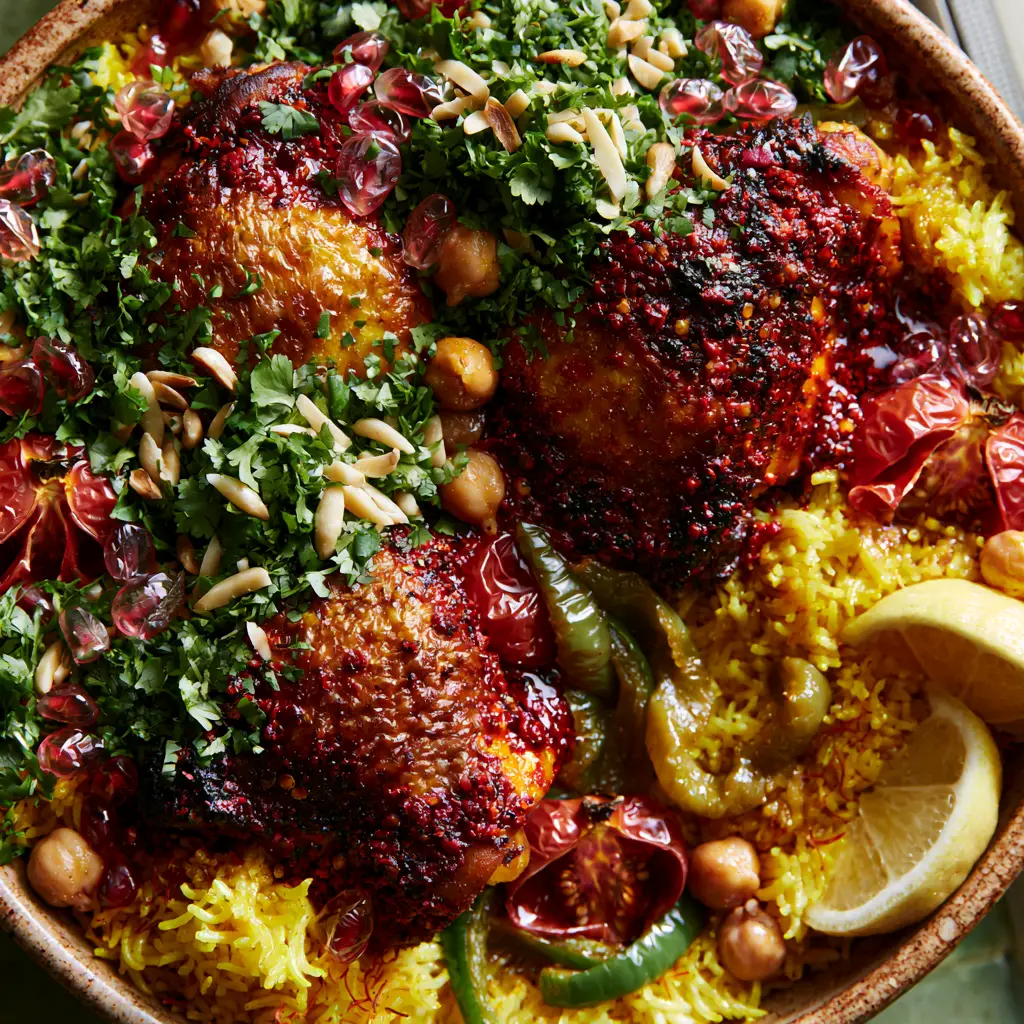
- Visual Brilliance: The contrast between the bronze-colored chicken skin and the bright green fresh chopped cilantro makes this a centerpiece-worthy dish.
The Core Ingredients for Authentic Moroccan Flavor
To achieve the depth of flavor required for a true Moroccan Chicken and Rice, quality ingredients are paramount. Here is what you will need to gather:
The Protein and Marinade
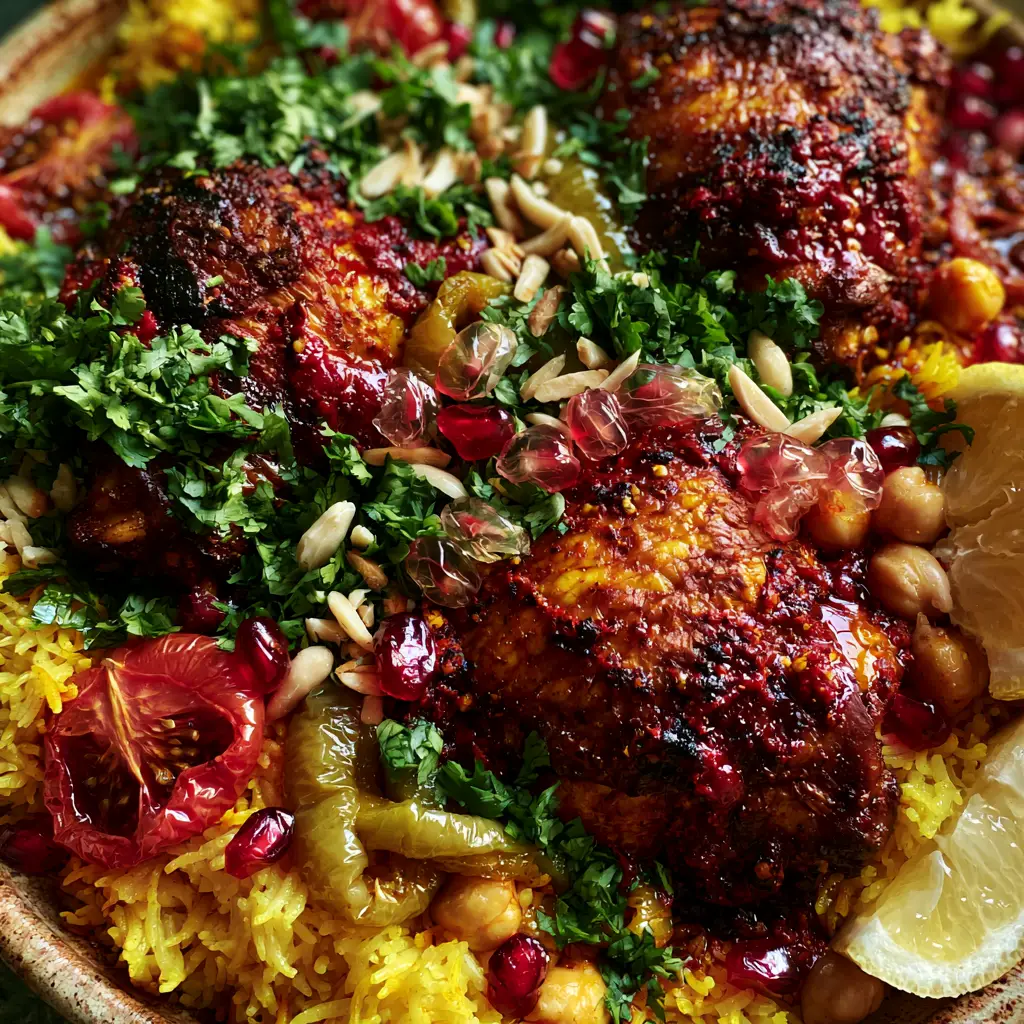
Chicken Thighs: Use 3 large bone-in, skin-on thighs. The skin is essential for achieving that deeply seared, crispy bronze color seen in the photos. The bone keeps the meat juicy during the rice’s simmering process.
Harissa Paste: This North African chili paste provides the “thick, glistening red harissa glaze.” Look for a brand that includes rose petals for a floral note, or a smoky variety for more depth. This is the same flavor profile often found in our harissa chicken favorites.
The Golden Rice Base
Basmati Rice: 1.5 cups (300g) of long-grain basmati is preferred for its ability to stay fluffy and separate. Unlike shorter grains, basmati won’t become mushy when cooked with the chicken.
Saffron and Turmeric: A pinch of saffron threads (steeped in warm water) and 1 tsp (5g) of turmeric provide the vibrant golden-yellow stain. This technique is a staple in many of our rice dishes, including the yellow rice and beans skillet.
Vegetables and Garnishes
Blistered Cherry Tomatoes: Adding these toward the end allows the skins to split and caramelize without the tomatoes disintegrating into the rice.
Green Bell Peppers: Sautéed until soft, these provide a mild, sweet earthiness that balances the heat of the harissa.
The “Jeweled” Finish: Fresh pomegranate arils, toasted slivered almonds, and fresh lemon wedges add the final acidity and crunch that makes the dish pop.
How to Make Moroccan Chicken and Rice Step-by-Step
1. Achieving the Perfect Harissa Sear
Start by coating your chicken thighs in a generous layer of harissa paste and a pinch of salt. In a shallow rustic ceramic skillet, heat 2 tbsp (30ml) of olive oil over medium-high heat. Place the chicken skin-side down. Do not move them for at least 6-8 minutes. You are looking for a deeply seared, bronze-colored skin with visible charred spice flecks. Flip briefly to seal the bottom, then remove and set aside. The chicken will not be fully cooked yet.
2. Sautéing the Aromatics
In the same skillet, leverage the rendered chicken fat. Add the green bell pepper strips and sauté for 3-4 minutes until softened. Stir in the steamed chickpeas and the dry basmati rice. Toast the rice for 2 minutes until the edges look translucent. This step ensures the Moroccan Chicken and Rice stays fluffy rather than clumpy.
3. The Golden Simmer
Pour in 2.5 cups (600ml) of chicken broth infused with your saffron and turmeric. Stir gently to distribute the spices. Nestling the chicken thighs back into the rice, skin-side up. Bring to a boil, then reduce heat to low, cover tightly, and simmer for 15-18 minutes. The rice should absorb the liquid and become steaming and fluffy.
4. Blistering and Finishing
In the final 5 minutes of cooking, scatter the red cherry tomatoes over the top of the rice. Replace the lid. The steam will cause the tomatoes to become blistered with split skins. Once the rice is tender, remove from heat and let sit, covered, for 5 minutes.
5. The Visual Garnish Loop
This is where the Moroccan Chicken and Rice truly comes to life. Just before serving, garnish with a flurry of bright green chopped cilantro, a handful of ivory-colored toasted slivered almonds, and the translucent ruby-red pomegranate seeds. Tuck two juicy lemon wedges into the edge of the skillet to provide a hit of fresh acid.
Expert Tips for Success
- Rinse Your Rice: Always rinse your basmati rice under cold water until the water runs clear. This removes excess starch and is the secret to fluffy, individual grains.
- Temperature Control: If the harissa starts to burn before the skin is crispy, lower the heat slightly. Harissa contains spices that can scorch if the oil is smoking.
- Saffron Hack: Grind your saffron threads with a tiny pinch of sugar using a mortar and pestle before steeping in water to extract the maximum color and aroma.
- Skillet Choice: A heavy-bottomed skillet or a cast-iron braiser is best for even heat distribution, preventing the rice at the bottom from burning.
Storage, Reheating & Freezing
Storage: Store leftovers in an airtight container in the refrigerator for up to 3 days. The flavors of the Moroccan Chicken and Rice often deepen the next day.
Reheating: To keep the rice fluffy, add a splash of water or broth before reheating in the microwave or on the stovetop. This creates steam that revives the grains.
Freezing: While the chicken and rice freeze well (up to 2 months), we recommend adding fresh garnishes (cilantro, pomegranate, and almonds) only after thawing and reheating to maintain the textural integrity.
What to Serve With This Skillet
While this is a complete one-pot meal, it pairs beautifully with a side of cooling cucumber yogurt sauce (tzatziki style) or a simple arugula salad with a lemon vinaigrette. If you’re looking for more global chicken inspiration, check out our tandoori chicken or the citrusy notes of lemongrass chicken. For a lighter side, a Greek chicken salad offers a crisp contrast to the warm spices of the Moroccan skillet.
Frequently Asked Questions
You can, but thighs are highly recommended. Thighs remain juicy during the long simmer with the rice and provide the essential rendered fat for the sautéed peppers.
Jasmine rice is stickier and softer. For this specific one-pot method, Basmati is superior as the grains stay long, separate, and fluffy.
The secret is searing the chicken first on high heat and not submerging the skin in liquid. The skin stays above the broth line while the rice simmers.
It varies by brand. Most harissa pastes have a medium heat level. If you are sensitive to spice, look for ‘mild’ or ‘rose’ harissa, or use a smaller amount.
If you don’t have saffron, you can increase the turmeric to 1.5 teaspoons. While you’ll lose the floral aroma, you will still achieve the beautiful golden-yellow color.
The Best One-Pot Moroccan Chicken and Rice Recipe
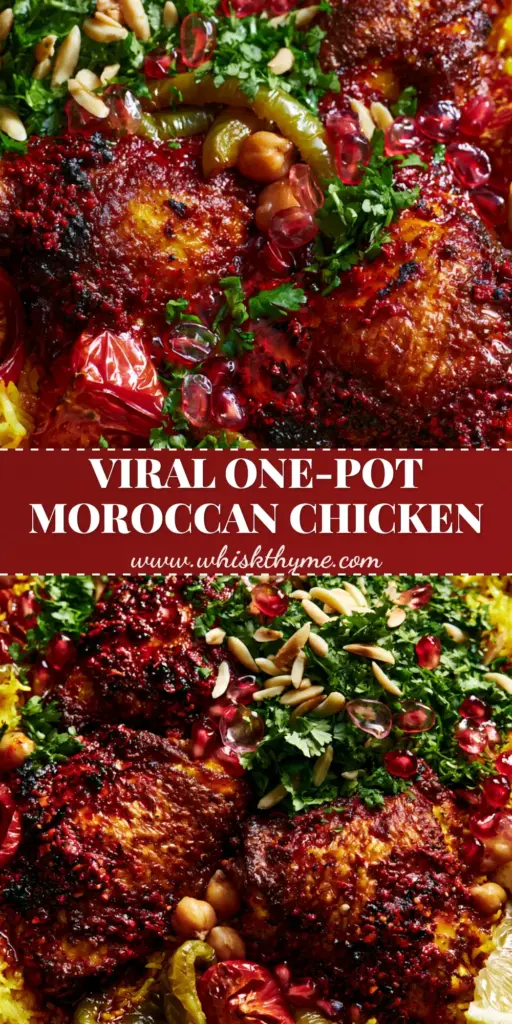
Moroccan Chicken and Rice: The Ultimate One-Pot Harissa Skillet
Ingredients
Equipment
Method
- Coat the skin of the chicken thighs with harissa paste. Heat oil in a skillet and sear skin-side down for 8 minutes until bronze and crispy.
- Remove chicken. Sauté green peppers and chickpeas in the same pan for 4 minutes. Add rice and toast for 2 minutes.
- Add broth, turmeric, and saffron water. Nestling chicken back in. Cover and simmer on low for 18 minutes.
- Add cherry tomatoes in the last 5 minutes of simmering. Let rest for 5 minutes off heat.
- Top with cilantro, toasted almonds, pomegranate seeds, and lemon wedges before serving.
Notes
Use a heavy-bottomed skillet to prevent the saffron rice from sticking to the bottom.
Join the WhiskThyme Community!
If you loved this Moroccan Chicken and Rice, please save it to your Pinterest boards so you never lose it! Following @whiskthyme helps us keep the kitchen fires burning and new recipes coming your way. Did you make this dish? We want to see! Share a photo of your skillet in the comments below and don’t forget to leave a 5-star rating if this became an instant favorite in your home. Happy cooking!